Artificial intelligence has become the primary driver of global capital markets over the last year, influencing public equities, private equity, infrastructure, energy, credit, and even real estate investment opportunities. The dispersion driven by investor worries about AI disruption has created opportunities, but continued narrow market leadership has also made it increasingly challenging for active managers to keep pace with broad market gains.
From an implementation perspective, we advocate for diversification across complementary sources of return.
Macroeconomic Outlook
The current macroeconomic environment is characterized by resilient but moderating global growth, persistent inflation, and structural shifts driven by AI. AI enthusiasm is fueling outsized performance in U.S. equities, semiconductor companies, and infrastructure investment while increasing dispersion across sectors, regions, and investment managers. Internationally, market leadership has shifted toward value-oriented sectors such as industrials, financials, energy, and defense, while emerging markets (EM) have been led by semiconductor-heavy economies like Taiwan and South Korea.
This presents several long-term investment implications. Higher interest rates have improved the attractiveness of high-quality government bonds, while tight credit spreads make lower-quality credit less compelling. Private markets continue to benefit from improving deal activity and AI-related innovation despite ongoing liquidity and fundraising challenges. Real assets—including infrastructure, energy, and selected real estate sectors—appear poised to benefit from rising electricity demand, data center expansion, and the need for significant investment in power and transportation infrastructure.
Overall, we believe the macroeconomic landscape favors diversified portfolios emphasizing high-quality assets, selective active management, private market exposure, and real assets positioned to benefit from secular AI-driven investment trends and persistent inflationary pressures. A low-volatility flexible capital program can also play an important role in hedging beta- and momentum-heavy equity portfolios.
Public Equity
AI remains the dominant force shaping global equity markets, driving significant differences in performance across regions and sectors. In the U.S., companies directly benefiting from AI infrastructure investment – particularly semiconductor manufacturers – have substantially outperformed software firms perceived to be vulnerable to AI disruption.
This trend has also extended to small-cap equities, where speculative and unprofitable companies have outpaced higher-quality businesses, creating a difficult environment for traditional active managers focused on valuation, profitability, and quality. As a result, market returns have become increasingly concentrated in a relatively small number of AI-related companies, making it challenging for diversified active portfolios to keep pace with passive benchmarks.
Outside the U.S., equity leadership has evolved differently. Developed international markets have experienced a rotation from growth toward value investing, with sectors such as energy, financials, industrials, and defense benefiting from geopolitical developments, infrastructure spending, and commodity strength.
However, developed international markets have generally lacked the semiconductor exposure that has fueled U.S. returns, while many growth-oriented holdings have faced pressure from AI disruption. EM leadership has shifted away from China toward Taiwan and South Korea, whose semiconductor industries have become critical suppliers to the global AI ecosystem, reinforcing the importance of AI-related supply chains as a key driver of regional performance.
Despite the challenging backdrop, we continue to identify active managers with strong long-term records whose recent underperformance appears driven by temporary market conditions, rather than deteriorating investment processes. At the same time, we have expanded the recommended lineup of risk-constrained, systematic, and diversified equity strategies to provide lower-tracking-error core portfolio solutions. Recent updates to the recommended manager list reflect a continued emphasis on improving implementation through high-conviction active managers, risk-managed strategies, and efficient passive exposures.
What We’re Watching
- The dominance of AI-related equities has continued to drive equity markets and increase index concentration, particularly in the U.S.
- EM leadership has shifted from China toward Taiwan and Korea due to semiconductor exposure supporting AI infrastructure.
- Valuations remain elevated and continue to accelerate, especially down market cap. The average weighted market cap of the Russell 2500 Index doubled from the end of March through the end of May.
- Active management has faced significant headwinds over the past year, especially for managers focused on quality/valuation. Passive indexes have experienced extreme momentum-driven performance down the market-cap spectrum; speculative companies dominate returns.
- These market dynamics have accelerated the long-term shift toward passive investing, with ETFs and active ETFs continuing to capture record inflows, while traditional active mutual funds experience ongoing outflows.
Fixed Income
While the U.S. economy remains relatively stable, moderating growth, persistently above-target inflation, and widening fiscal deficits have complicated the monetary policy outlook and left the economy more vulnerable should inflation persist or growth weaken further. In response, central banks shifted toward a more hawkish, “higher for longer” interest rate stance, pushing Treasury yields higher and creating a more attractive entry point for high-quality government bonds. Consumer spending continues supporting overall economic activity, although wage growth has slowed and lower-income households remain under pressure from higher prices.
We recommend an implementation framework that combines high-conviction active managers with passive Treasury strategies to build well-diversified fixed income portfolios. Core active managers are intended to be complemented by dedicated Treasury allocations or passive aggregate bond funds, while credit-oriented strategies, including high yield, leveraged loans, and unconstrained fixed income, should be used selectively as complementary exposures rather than replacements for high-quality bonds.
What We’re Watching
- Given the increasingly uncertain macroeconomic environment, we believe fixed income allocations should prioritize quality over yield.
- We believe that Treasuries now offer better long-term value than many credit sectors – where spreads remain historically tight and provide limited compensation for additional risk.
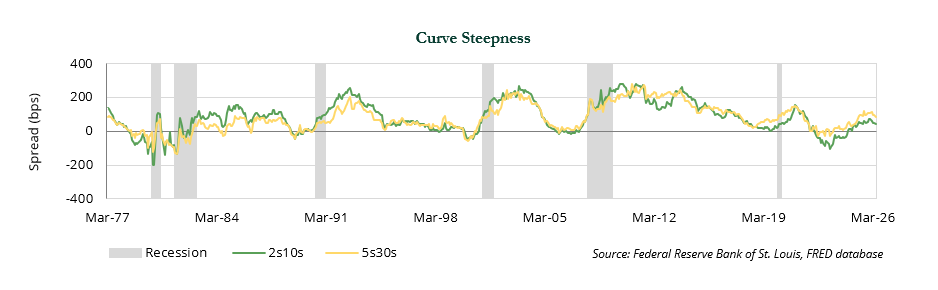
- With a steeper yield curve and more attractive long-term yields, some clients may benefit from extending duration to improve portfolio resilience against equity volatility and sudden shifts in the macroeconomic environment. Extending duration may also provide incremental yield. We recommend a blend of intermediate- and long-duration Treasuries.
- New Fed Chair Kevin Warsh mentioned his concern over inflation at his first meeting and indicated that the Fed’s near-term focus will be on inflation dynamics. He had a far more hawkish tone since becoming Fed Chair compared to comments he made during the confirmation process. Additionally, he expressed his desire to cease holding a press conference after every Fed meeting, which could have downstream effects on markets.
Flexible Capital/Private Credit
We view flexible capital allocations as a means to diversify portfolios beyond traditional equity and fixed income exposures, while pursuing differentiated sources of alpha, downside protection, and improved risk-adjusted returns. While AI continues to dominate public equity markets, alternative strategies (e.g., quantitative investing, merger arbitrage, selective hedge funds, and private credit) offer attractive opportunities to generate returns that are less dependent on market beta.
Increasing market dispersion has created a more favorable environment for skilled active managers, making manager selection a critical driver of performance in this market segment. Simultaneously, developments such as expanding merger activity, moderating competition in private credit, and the rapid growth of tax-aware separately managed accounts and portable alpha strategies have broadened the opportunity set for flexible capital investors.
Across alternative investment strategies, there have been several important market trends. Hedge funds have increased net market exposure as confidence has improved, and long/short equity managers are benefiting from greater stock-level dispersion despite continued challenges on the short side. Tech-focused managers have aggressively shifted portfolios toward semiconductor and AI infrastructure companies while reducing exposure to software firms facing AI-related disruption.
Credit markets have also become increasingly differentiated, with software borrowers experiencing greater stress, even as direct lending conditions improve through wider spreads and stronger lending terms. These developments reinforce the importance of remaining flexible and selective as market leadership continues to evolve.
We recommend implementing flexible capital exposure through diversified portfolios of complementary managers spanning long/short equity, event-driven, distressed, and absolute return strategies. Rather than concentrating risk in a single approach, portfolios should combine multiple high-conviction managers with disciplined investment processes, strong organizational infrastructure, and proven risk management capabilities. Historical performance demonstrates that this diversified approach has produced attractive long-term returns with lower volatility, lower market beta, and stronger downside protection than traditional equity portfolios.
What We’re Watching
- Merger and acquisition activity has accelerated, creating a broader opportunity set for merger arbitrage managers as deal volumes increase and regulatory scrutiny keeps spreads attractive.
- Net market exposure has increased to its highest level since 2022, reflecting greater manager confidence, while gross exposure remains elevated even after declining modestly during early 2026.
- Diversified alpha sources remain more attractive than concentrated equity beta.
- Multi-manager platforms continue to capture the vast majority of net new inflows, widening their asset gap relative to mid-sized single-manager funds.
- Software credit is under pressure from AI disruption, and managers with concentrated software exposure may continue experiencing valuation pressure.
- We expect that private credit returns will be more muted in 2026 than previous years, with notable dispersion between disciplined and experienced lenders and more aggressive asset gatherers.
Real Assets
We have a constructive view on the long-term outlook for real assets and its diverse set of categories. Powerful pre-AI secular trends across digital, power, transportation, water, and waste infrastructure continue to accelerate. The AI buildout of the last several years has created a “wave on top of a wave” dynamic, particularly in the digital, power, and increasingly water sectors. This dynamic, combined with aging and frequently outdated infrastructure stock in the developed world, creates significant opportunity. A cyclical reset in real estate valuations, strong demand for space, and a steep drop in new supply have spurred an uneven recovery across sectors. These factors, combined with broken legacy capital structures and refinancing pressures, create potentially attractive entry points in public and private markets.
Energy markets were upended by a historic supply shock in Q1 and Q2, followed by what appears to be a fragile peace. Longer-term underinvestment in new supply and steadily growing global demand continue to support conventional and renewable energy investments. These trends, along with attractive public market valuations and limited dry powder in private energy markets, create an attractive environment for disciplined investors. Elsewhere in resources, the electrification of industry, manufacturing, and fleets, along with growth in power needs, is creating growing demand for metals from copper to rare earths, while gold is in high demand from a diverse set of buyers as well as de-dollarization trends and concern around U.S. debt levels.
We recommend building real asset portfolios with a long-term lens, a meaningful allocation, and balanced exposure across segments given the cyclical nature of each category. Public real asset allocations can include segment-by-segment construction or diversified real asset funds, which provide the simplicity of diversified exposure in a single fund. Single real asset funds can provide automatic rebalancing and may be easier to stay invested in over the long run, as they provide protection against inevitable drawdowns in any given segment.
Well-executed private implementation provides the opportunity for premium returns. Our preferred implementation prioritizes diversification by vintage year, sector, strategy, and general partner. We look to anchor programs with diversified multisector strategies, complemented by specialist sector funds. We focus on firms and strategies with cohesive teams, operational and domain expertise, a repeatable edge, strong general partner and limited partner alignment, and a focus on markets with favorable fundamentals.
What We’re Watching
Infrastructure
- Tailwinds continue to benefit incumbent assets, as well as greenfield developments across infrastructure sectors.
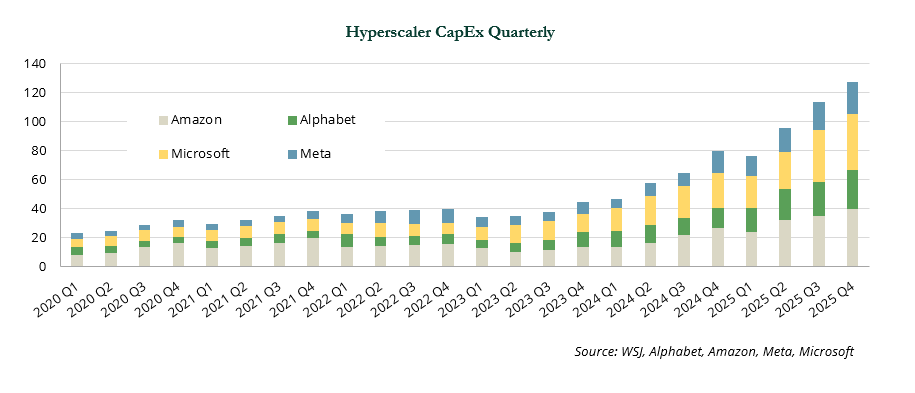
- Hyperscaler AI spend continues to increase at an unprecedented scale, but bottlenecks and NIMBYism are impeding growth, creating opportunities for skilled operators deep in their respective markets.
- Asset-level risk/return profiles vary widely by quality, market, counterparty, and workload—particularly in digital infrastructure and power, where AI training demands differ materially from non-AI cloud and connectivity uses.
- Capital inflows have been driven by mega-cap funds, with investors seeking exposure to the asset class’s tailwinds. While scale can be an advantage in certain areas, the dynamic deepens the exit pool for middle-market and specialist funds.
Real Estate
- Strong demand for space, even in areas of the office market, improved credit availability, and a steep drop in new supply are prompting a recovery. Potential rate hikes may slow the rate of recovery and growth.
- Fundamentals are improving at an uneven pace across sectors and markets. For example, senior housing fundamentals are accelerating, while some Sunbelt multifamily markets are still absorbing the wave of 2020 to 2022 new starts.
- Downturns and periods of capital scarcity are often the most attractive time to put capital to work in a cyclical asset class.
- Public real estate markets, which tend to lead private real estate in both up and down cycles, traded higher in 2025 and through Q2 of 2026, and may offer an early signal for private market recovery.
Resources
- The supply shock disruption has the potential to pull forward market tightness not expected until 2027.
- Despite strong returns, private energy/resources fundraising has remained anemic, creating opportunities for experienced teams that have navigated cycles and are able to raise funds.
Are Tourist and Generalist Investors on the Way?
- Opportunities in real assets are emerging as focus areas for institutions and retail investors, and as hedges to perceived AI froth in software-as-a-service exposure.
- Talk in the market and industry publications around “HALO” (heavy asset and low obsolescence investments), along with hard asset themes in various asset classes (i.e. private equity and private credit), may increase capital formation and competition.
Private Equity
We remain positive on the long-term outlook for private equity, although the near-term environment remains challenging. Liquidity has yet to recover meaningfully, financing costs remain a concern, and sponsors continue to be selective in deploying capital. While deal activity has held up, transaction values and exits have come under pressure, as higher borrowing costs and valuation gaps make larger transactions more difficult to complete.
Low distributions have also weighed on fundraising, with capital increasingly flowing to larger, more established managers despite significant dry powder across the industry. At the same time, AI is reshaping the investment landscape, driving a reassessment of software valuations and placing greater emphasis on operational improvement as a source of value creation. In this environment, we believe manager selection, disciplined underwriting, and operational expertise will be the primary drivers of long-term returns.
Our approach to private equity is centered on building diversified portfolios across buyout, growth equity, venture capital, and opportunistic strategies to create multiple sources of return and improve resilience across market cycles. We emphasize manager selection, focusing on firms with differentiated sourcing capabilities, disciplined underwriting, strong operational value creation, stable organizations, and aligned interests. We seek to implement high-conviction opportunities, provide clients access to capacity-constrained managers, and pace commitments over time. We believe this disciplined, long-term approach helps clients build private equity programs capable of delivering durable returns across a range of market environments.
What We’re Watching
- Private equity has historically rewarded long-term investors, and recent market conditions have reinforced the importance of manager selection over market timing.
- Across buyout, growth equity, and venture capital, we believe experienced managers with disciplined underwriting, strong operational capabilities, and differentiated sourcing will be best positioned to generate attractive returns.
- We continue to favor diversified private equity programs anchored by buyout strategies, particularly in the lower middle market and middle market, where competition is typically less intense and managers have greater opportunities to create value through operational improvements.
- In venture capital, returns remain highly concentrated among a relatively small group of top-performing managers, making manager access, selection, and vintage-year diversification critical to long-term success.
- We believe growth equity offers an attractive complement to buyouts and venture capital by providing exposure to innovative businesses at a more mature stage of development, particularly as AI adoption continues to create new investment opportunities.
- While the IPO market has shown improvement, activity remains concentrated in larger issuers. We are closely watching the IPO pipeline to see whether SpaceX’s record-breaking offering could broaden the IPO market.
- We continue to view vintage-year diversification as one of the most effective ways to manage changing market conditions and improve long-term portfolio outcomes.
Concluding Thoughts
The 2026 environment underscores the importance of thoughtful portfolio construction as AI-driven change, elevated valuations, concentrated market leadership, persistent inflation, and uneven liquidity create both opportunities and risks across asset classes. In this environment, selectivity, diversification, and disciplined risk management remain essential.
We continue to believe portfolios should combine complementary sources of return across public equities, fixed income, flexible capital, private equity, and real assets. High-quality assets, carefully selected active managers, efficient passive exposures, and strategies positioned to benefit from long-term secular trends can help investors participate in market gains while reducing dependence on any single source of return.
Prime Buchholz remains committed to building diversified portfolios aligned with each client’s long-term objectives, liquidity needs, and tolerance for risk.
We look forward to partnering with you as market conditions evolve and helping position portfolios for durable long-term outcomes.
− The Prime Buchholz Investment Team
Indices referenced are unmanaged and cannot be invested in directly. Index returns do not reflect any investment management fees or transaction expenses. This report was prepared by Prime Buchholz LLC (Prime Buchholz). The report is intended for informational purposes only; it does not constitute an offer, nor does it invite anyone to make an offer, to buy or sell securities. Information obtained from third-party sources is believed to be reliable, however, the accuracy of the data is not guaranteed and may not have been independently verified. The content of this report is current as of the date indicated and is subject to change without notice. It does not take into account the specific investment objectives, financial situations, or needs of individual or institutional investors. All commentary contained within is the opinion of Prime Buchholz and intended solely for our clients. Some statements in this report that are not historical facts are forward-looking statements based on current expectations of future events and are subject to risks and uncertainties that could cause actual results to differ materially from those expressed or implied by such statements. Frank Russell Company (“Russell”) is the source and owner of the trademarks, service marks and copyrights related to the Russell Indexes. Russell® is a trademark of Frank Russell Company. Neither Russell nor its licensors accept any liability for any errors or omissions in the Russell Indexes and / or Russell ratings or underlying data and no party may rely on any Russell Indexes and / or Russell ratings and / or underlying data contained in this communication. No further distribution of Russell Data is permitted without Russell’s express written consent. Russell does not promote, sponsor or endorse the content of this communication. For Morningstar output: © Morningstar 2026. All rights reserved. Use of this content requires expert knowledge. It is to be used by specialist institutions only. The information contained herein: (1) is proprietary to Morningstar and/or its content providers; (2) may not be copied, adapted or distributed; and (3) is not warranted to be accurate, complete or timely. Neither Morningstar nor its content providers are responsible for any damages or losses arising from any use of this information, except where such damages or losses cannot be limited or excluded by law in your jurisdiction. Past financial performance is no guarantee of future results. Copyright ©2026, S&P Global Market Intelligence (and its affiliates, as applicable) Reproduction of any information, data or material, including ratings (“Content”) in any form is prohibited except with the prior written permission of the relevant party. Such party, its affiliates and suppliers (“Content Providers”) do not guarantee the accuracy, adequacy, completeness, timeliness or availability of any Content and are not responsible for any errors or omissions (negligent or otherwise), regardless of the cause, or for the results obtained from the use of such Content. In no event shall Content Providers be liable for any damages, costs, expenses, legal fees, or losses (including lost income or lost profit and opportunity costs) in connection with any use of the Content. A reference to a particular investment or security, a rating or any observation concerning an investment that is part of the Content is not a recommendation to buy, sell or hold such investment or security, does not address the suitability of an investment or security and should not be relied on as investment advice. Credit ratings are statements of opinions and are not statements of fact. ©2026 PitchBook. All rights reserved. PitchBook Data, Inc. PitchBook retains sole ownership over any Content incorporated into the Work Product. Nothing herein should be construed as a guarantee of future results. © 2026 Prime Buchholz LLC